
Key takeaways
Industry ResearchAugust 3, 2026
The economic reasoning for operating American health systems has shifted. For decades, the procurement function was run as a cost center to be optimized.
Health systems negotiated essential supplies for care delivery into multi-year contracts, benchmarked against peers, and supply professionals, including Production Planners, Demand Planners, and Commodity Managers, were mostly absent from the strategic conversations that determine whether a health system expands, stagnates, or consolidates.
In 2026, that structure no longer matches reality. Input costs are rising faster than reimbursement can keep pace, patient demand is increasingly complex and acute, and the operating room, the primary revenue generator in most facilities, depends on a supply ecosystem engineered for stability but now operating amid perpetual market volatility.
When a critical product is backordered, allocated, recalled, or unavailable, the consequence is not a procurement bottleneck. It is a canceled surgical case.
In this white paper, we formulate the thesis that preserving surgical throughput has become a core financial discipline. And that off-contract sourcing, traditionally treated as an exception to be minimized, is a strategic lever that belongs in health systems’ executive toolkits as a revenue insurance policy. The infrastructure to support that shift, however, has not existed. Until now.
Cato Healthcare Supply is the first procurement platform purpose-built for operationalizing off-contract sourcing as a revenue-protecting asset that closes the structural gap between market volatility and surgical continuity.
Health systems’ financial performance in 2026 is defined by the gap between hospitals’ revenue streams and the true cost of delivering care.
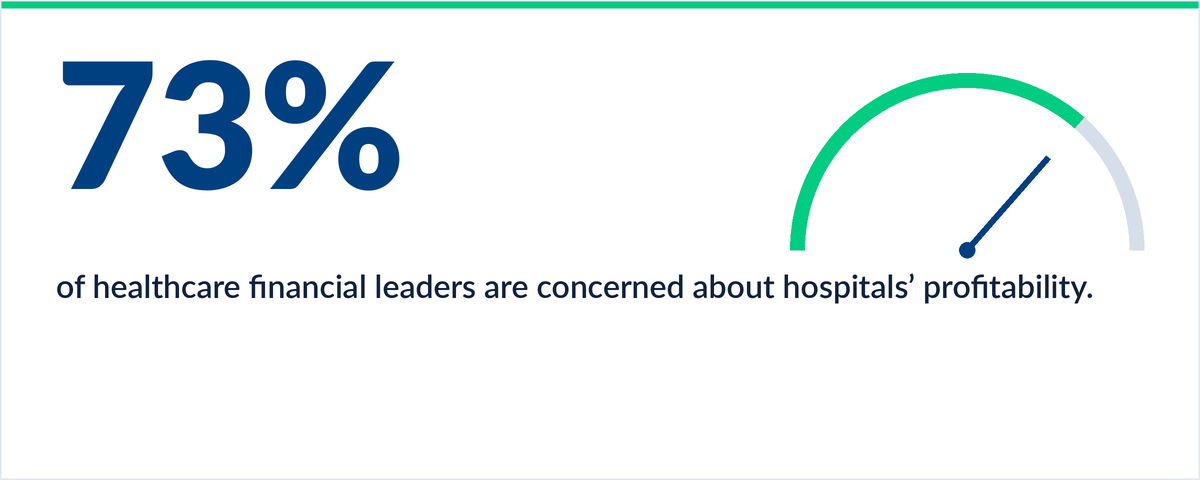
Health systems’ median year-to-date operating margin was -0.3 % in February 2026, and 73% of healthcare financial leaders reported concerns about their hospitals’ profitability.1-2
One out of three rural hospitals in the nation is at risk of closing due to financial struggles. Five main variables explain the economic pressures American hospitals are facing.
1) Medicare reimbursement stagnation
Medicare reimburses only 83 cents per dollar spent on care, while what hospitals charge patients rose just 3.3% in 2025, a figure well below the rate at which the inputs required to treat patients are rising.3-4
2) Hospital expenses inflation
Supply spend increased by 9.9% in 2025, driven by market dynamics that led to higher prices, including manufacturing capacity disruptions and higher transportation and raw materials costs.5
3) Clinical workforce dynamics
Labor accounts for 60% of hospital expenses, and due to workforce shortages and policies to attract top talent, registered nurses’ salaries have grown 26% faster than inflation.6-7
4) Rising patient demand
Inpatient volumes, which reflect more complex patients, rose 5.3% in 2025, leading to more expensive tests, more staff per case, and higher consumption of intensive care supplies.8 Over 90% of health system executives acknowledge difficulty meeting community demand.9
5) Executive turnover
CFOs at health systems with revenue above $15 billion have held the role for 2.5 years or less, reflecting a 40% turnover rate that undermines the long-term continuity on which strategic execution, stakeholder trust, and financial transformation all depend.10
The structural margin math is unforgiving: costs are rising faster than prices, demand is growing more rapidly than capacity, and reimbursement is not closing either gap.
While cost-containment initiatives have their place in addressing profitability concerns, extreme measures can degrade the quality of care. Optimizing revenue streams is an ideal area to focus on.
While hospitals’ central purpose is to serve their communities by providing quality care when individuals and families need them most, long-term clinical operations are unsustainable without healthy financial results.
The delicate balance between offering competitively priced services while generating enough profit to attract top clinical talent, invest in innovative equipment, and provide access to the latest therapeutic procedures is a daily challenge for health systems.
A hospital never closes: staff are always on-call, equipment is continuously operational, and supply rooms must remain stocked. Those fixed expenses must be covered by the services offered.
For many years, in nearly every facility, operating rooms (ORs) and procedural departments have served as the financial engines powering care feasibility.
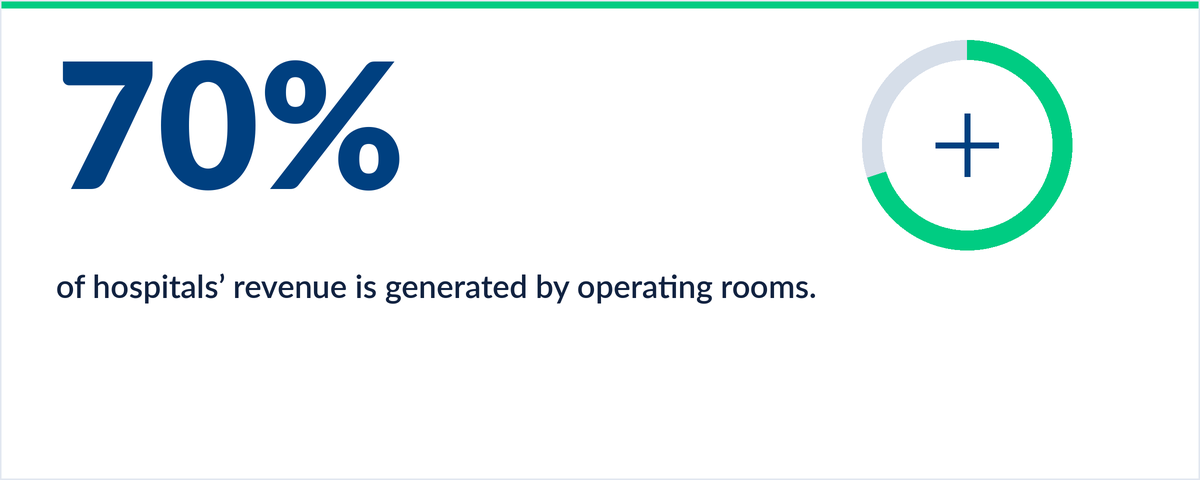
ORs generate 70% of hospitals’ revenue.11 Therefore, protecting surgical throughput is one of the highest-leverage moves available to health systems executives.
Any canceled case makes the fixed-cost environment more expensive, because the most profitable revenue stream no longer absorbs those costs.
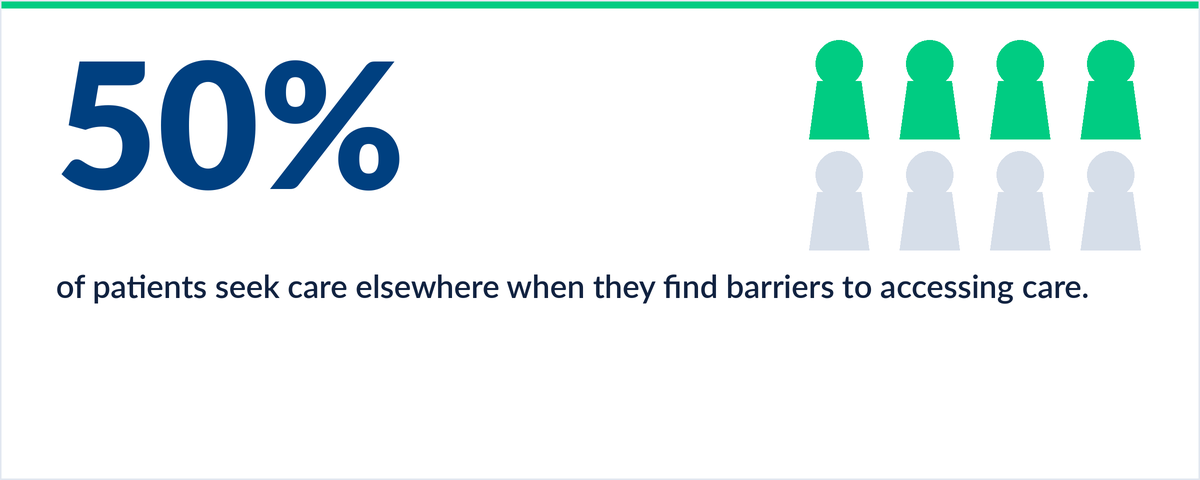
And with 39% of U.S. health systems canceling procedures due to constraints on essential medical supplies, this is a lever hospitals can pull to better synchronize the demand for surgical services with their capacity to deliver them profitably.12

95% of U.S. hospitals source medical supplies through group purchasing organizations (GPOs), which aggregate demand and negotiate multi-year contracts on their behalf, while distributors maintain inventory and manage delivery to hospitals.13
The centralized model has benefits, such as leveraging purchasing volume to secure discounted prices and standardizing products across sites, but it also has a fundamental weakness: limited flexibility when health systems need to respond quickly to supply disruptions.
In 2026 and beyond, several forces converge to make supply disruptions a baseline condition of hospital operations rather than a periodic event.
When these parallel pressures collide with a contract model that assumes predictable supply and pricing, inventory processes based on historical data that don’t account for disruptions, and GPO structures that offer limited visibility into functional equivalents beyond contracted brands, clinical teams have nowhere to turn.
The result is a missing product on the day it is needed most. And when a surgical case gets canceled due to a supply shortage, the loss is not singular. It is layered.
Many items can trigger a surgical cancellation. In recent months, perioperative essentials, such as syringes, needles, gowns, face shields, wound care dressings, and catheters, have been in short supply, leading to postponed procedures.
When a surgical case is canceled due to supply shortages, health systems feel the impact in three different layers.
A shortage of essential medical supplies diverts resources from care delivery, prompting staff to seek alternatives as cases are reallocated and throughput becomes inconsistent. When that friction becomes routine, both team morale and profitability go down.
One out of every five medical supply transactions already occurs off-contract, creating a routine source of friction in hospital operations due to a lack of standardized channels for accessing disrupted medical supplies.21
So, when disruption is the norm, the operating margin must be protected through flexibility, diversification, and the ability to source off-contract without sacrificing speed or clinical confidence.
Supply chain, under this framing, becomes financial infrastructure. An insurance layer that absorbs external shocks before they reach ORs’ schedules and P&Ls.
Reframing the economics of procuring medical supplies is an essential shift for health systems at this moment.
Cato Healthcare Supply was founded to help health systems overcome supply disruptions. It’s the first healthcare procurement platform purpose-built for off-contract purchasing when operational continuity is at risk due to shortages, allocation constraints, tariff volatility, and product recalls, serving as a trusted sourcing and fulfillment partner when health systems need to go off-contract.
Born out of the need for reliable access to essential medical supplies during disruptions, Cato complements existing GPO relationships by expanding supply optionality and strengthening resilience across hospital supply chains.
Cato’s goal is to protect health systems’ capacity to deliver care while also ensuring profits remain consistent.
The following diagram illustrates the financial impact of a canceled 90-minute posterior lumbar interbody fusion procedure for lower back pain due to supply shortages.
A canceled procedure compounds losses at every stage. Using an industry-average OR idle cost of $100 per minute, canceling this procedure incurs $9,000 in sunk expenses.22
Under a traditional model, the facility then absorbs $20,858 in uncollected procedure revenue.23 This figure excludes costs rarely captured in standard analysis: labor expenses from clinicians and sourcing personnel health systems must deploy or hire to identify and procure supplies in secondary channels, where prices for identical items from the same manufacturer vary by as much as 100%.24
In contrast, the Cato Healthcare Supply model sources secondary-channel products transparently and competitively. Assuming a $1,200 market premium for an implantable device required for the procedure, the facility successfully rescues the case.
Under this strategic approach, the procurement function becomes revenue insurance, transforming a cancellation into a net financial gain of $19,658.
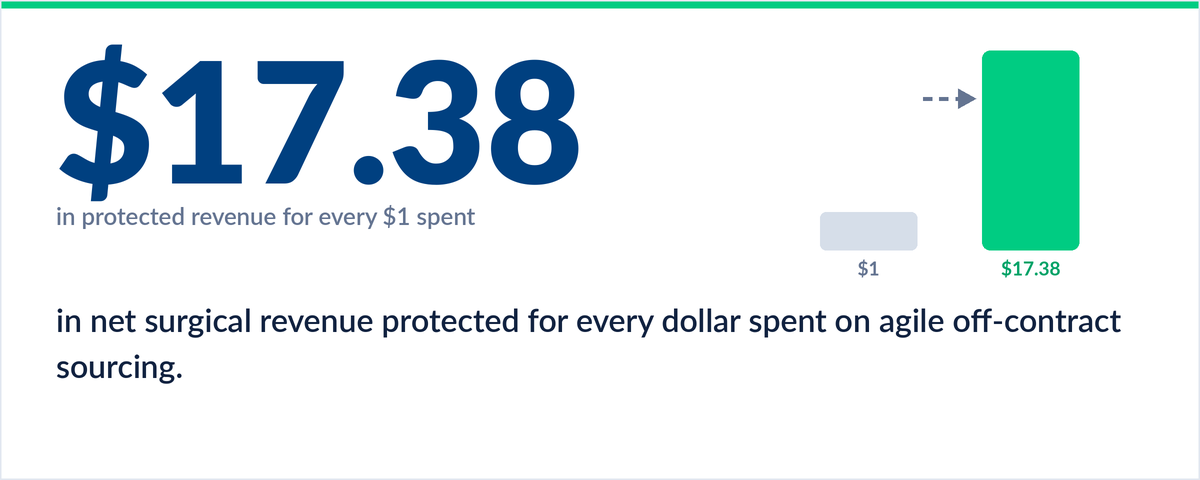
The Cato Multiplier: For every $1.00 spent with Cato Healthcare Supply to prevent a cancellation, the hospital protects approximately $17.38 in net revenue.
For large health systems operating dozens of ORs across multiple facilities, this revenue insurance can protect against hundreds of thousands of dollars in daily losses.
Preserving and growing revenue streams is a central mandate for every health system executive. In 2026, tariffs, cyberattacks, political uncertainty, and supply constraints are no longer external risks; they are operating conditions to manage.
Traditional supply chain performance metrics — contract compliance, price variance, stockroom efficiency — remain essential but are no longer sufficient.
Disciplined financial stewardship will characterize resilient health systems over the next decade, and preventing revenue leakage by fortifying the reliability of surgical cases will be a strategic financial advantage.
GPOs do exceptional work and remain critical actors in American healthcare; however, their core mission is not disruption management or shortage monitoring, two areas that warrant deliberate investment to complement GPO strengths.
For health systems’ leaders, five imperatives are worth investing in.
First, reframe supply resilience as a strategic imperative for value creation, not a back-office efficiency project. Business continuity and cost savings are not tradeoffs. Volume contracting and off-contract partnerships are complementary strategies.
Second, establish off-contract sourcing channels now. In most disruptions, pre-existing off-contract relationships spanning multiple supply categories aren’t available when procurement teams reach for them. The time to vet suppliers, align clinical approvals, and wire in an execution layer is not during a crisis.
Third, quantify the full cost of cancellation, not just the supply cost avoided: include displaced revenue, leaked patients, surgeon migration, and the fixed-cost inefficiency of an empty OR.
Fourth, align supply chain, surgical leadership, and finance around a shared metric: cases never canceled due to supply shortages. Track the operational indicators that produce it: supplier concentration, lead times during disruption, clinical-equivalent approval timelines, disruption exposure, and the burden of manual operations.
Fifth, evaluate the ROI of technology investments by the capacity they return to the organization, both by reducing wasteful activities and by improving patient access to essential procedures.
Finally, consider solutions like Cato Healthcare Supply. Designed to fit within existing infrastructure without overhauling legacy platforms, it’s an off-contract, targeted optimization and orchestration layer on top of the systems that hospitals already operate.
A more reliable sourcing mechanism for medical supplies serves as insurance against risks that compromise financial growth.
Reliability in surgical cases is a virtuous cycle: the more revenue a hospital generates and the better the patient experience it provides, the more its community benefits.
That cycle includes less waste, cost optimization, better outcomes, happier patients, increased community trust, stronger reputation, greater leverage in negotiations with payers, and reimbursement robust enough to reinvest in infrastructure and top talent.
Because in 2026, the supply chain is a care-delivery capability that integrates essential supplies with surgical teams that cannot perform without them.
The margin structures of American health systems can no longer absorb the revenue loss from medical supply disruptions that lead to canceled surgeries.
The work ahead is unglamorous, but investing in sourcing infrastructure and partnerships to secure ORs’ profitability is a strategic lever that is too costly to ignore.
Off-contract spending optimization, as a complementary mechanism to GPO contracts, is a tangible way to increase the resilience of American hospitals and to serve as financial insurance for the uninterrupted functioning of their most profitable asset: the operating rooms that sustain the mission of care.
Reach out to Cato to explore how your health system can keep patients safe while simultaneously strengthening clinical revenue streams.